
Board breaking is one of the most thrilling parts of martial arts, especially for kids. When parents witness the dramatic crack of a board, they often wonder about its purpose. Is it simply for show, or does it actually teach kids something valuable?
Rest assured, board breaking plays a meaningful role in a child's growth. It may sound odd, but it's not just about brute strength or being aggressive. Instead, it focuses on building concentration, self-esteem, technique, and the belief in oneself.
For many children, breaking a board can be a defining moment. It's often the first time they realize that with effort, discipline, and the right guidance, they can conquer something that once felt impossible.
If you're considering martial arts classes for your child, understanding the significance of board breaking can help you see what they'll learn along their journey.
So, let's dive deeper into why board breaking matters more than you might think!
Board Breaking Is About Technique, Not Strength
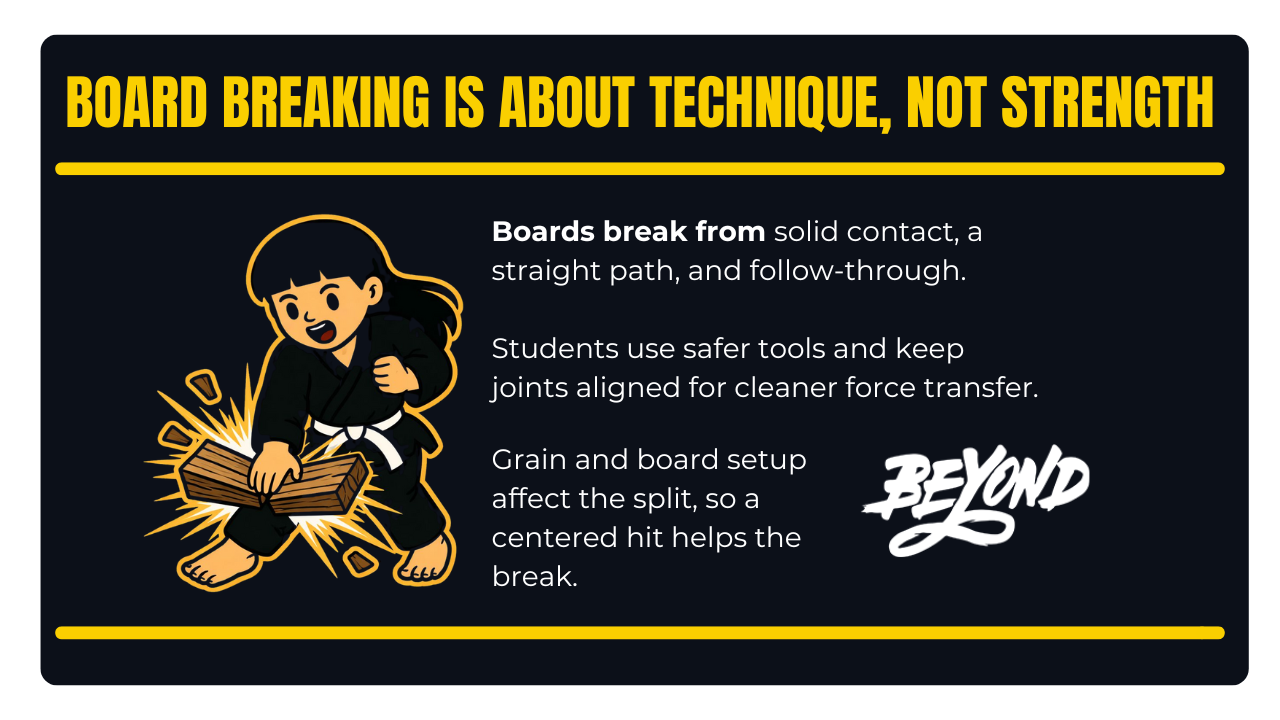
A board splits when force lands in the right place, at the right angle, with the right contact surface.
Instructors teach students to strike with safer tools like a palm-heel, knife-hand, or the ball of the foot. They also teach alignment so the wrist, elbow, and shoulder stay stacked. That alignment helps the whole body work together.
A useful mental cue is to aim past the board. Some coaches teach students to focus a few inches behind the target so the strike keeps moving after contact.
Wood has grain and weak spots. When the holder presents the board well and the student hits the center with a straight path, the break becomes smoother.
Learning to Face Fear in a Safe Way
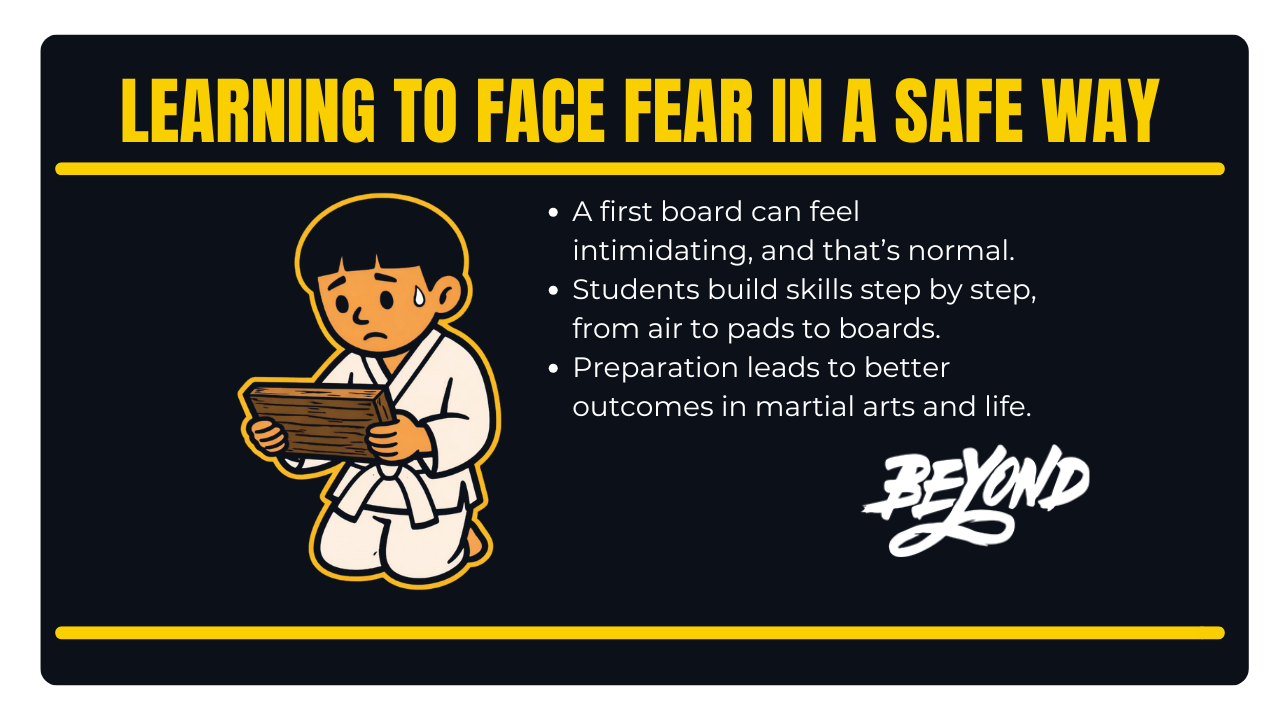
Yes, a hard object like a wooden board can look intimidating to a child. That first break brings nerves, and that is perfectly okay, and normal.
A strong martial arts program builds up step by step to reach that point. Students will rehearse the motion in the air, then on pads, then on easy targets. Rebreakable boards really can help here because they pop apart and then they slide back together for repeat practice.
Each step gives kids or students proof that preparation changes outcomes. That lesson carries into so many other areas of life like school, sports, and new social situations.
Board Breaking Reinforces Focus and Follow-Through
Breaking is a reward for follow-through. If a strike slows down at the surface, then the board stays intact. If the strike keeps moving, the board splits.
Growing and cultivating this habit helps to train focus. Kids learn a simple sequence: stance, breath, target, strike. They practice finishing what they start.
It also reinforces self-control. Coaches correct wild swings fast and reward precise work.
Is Board Breaking Safe for Kids?
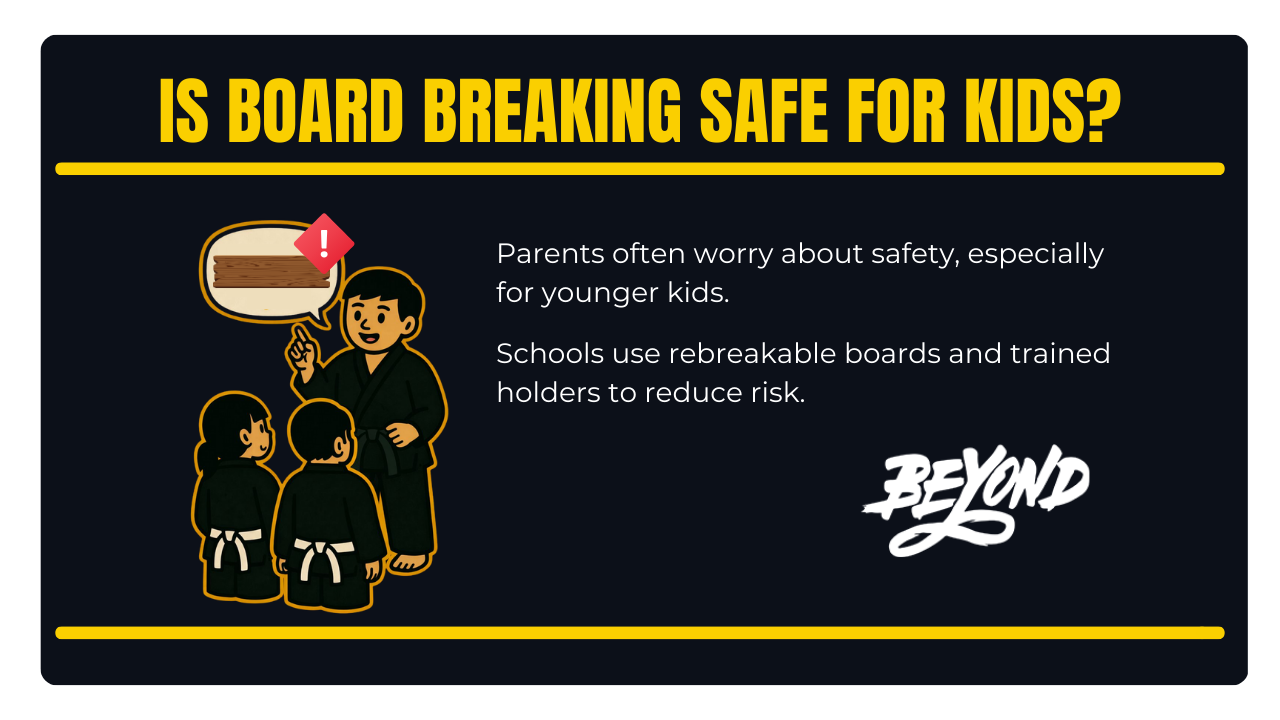
Sometimes, parents express concerns about their child engaging in board breaking as part of their martial arts training. They might feel their child is too young or have concerns about the risks involved.
Typically, schools can use rebreakable boards to reduce splinters and support repeat training. Basically, how these boards work is they are high-impact plastic boards that split at a seam and then lock back together.
Also, there are trained board holders. They brace the board, keep their fingers clear, and present a stable target for the student. Some schools also position their hands to cover those rough corners for younger kids.
Youth injury research helps set expectations. An American Academy of Pediatrics report summarizing martial arts injury data reports that most injuries reported in large studies are minor, though fractures and concussions can occur. It also emphasizes rehearsing proper mechanics for complex skills, including breaking boards, before students attempt them.
Emergency department data also shows hand and wrist injuries as a common location in pediatric martial arts injuries.
If your child ever has swelling, sharp pain, or avoids using a hand or foot after class, check in with a medical professional.
At What Age Can Kids Start Board Breaking?
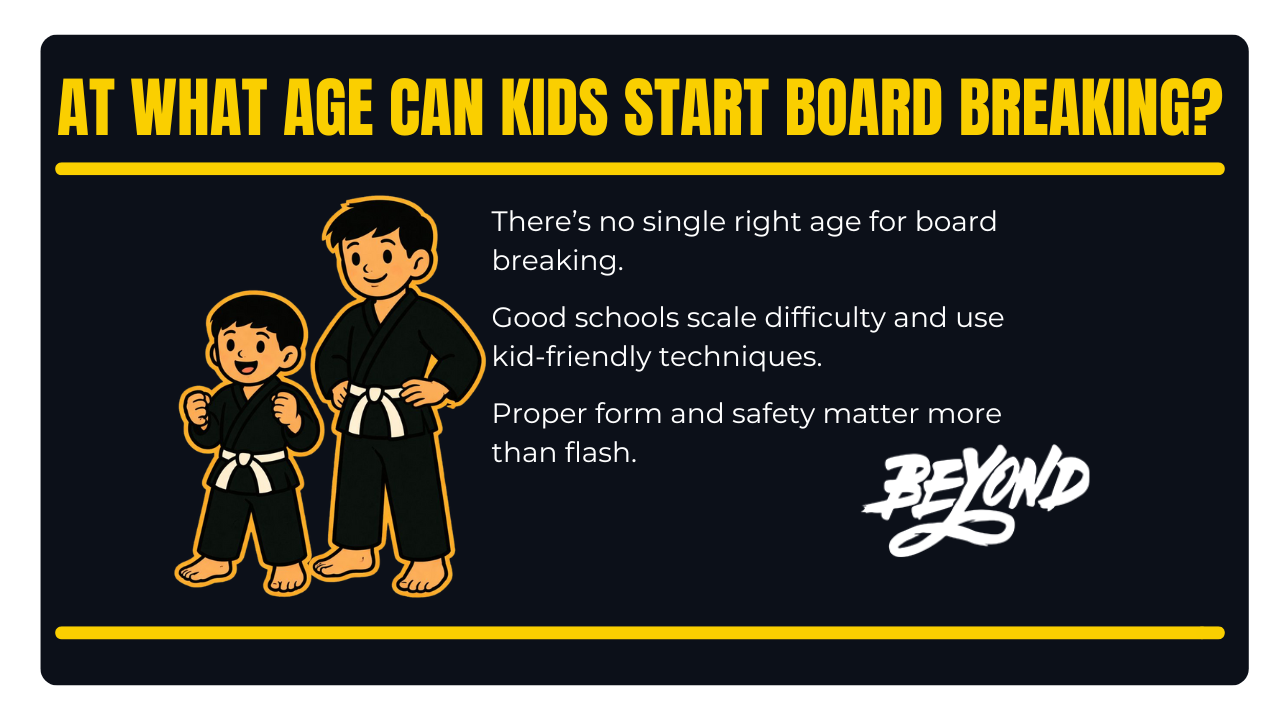
There is no single age that fits every child. Schools also vary in how they teach breaking.
A typical program starts with students' basics, such as how to balance, stances, and nice, clean strikes. Then it adds easy targets matched to the child's size and coordination.
Some instructors use stomp-style breaks for young kids to reduce injury risk.
From a health standpoint, kids have growth plates near the ends of long bones, and these areas are more vulnerable to injury than mature bone.
As a parent, look for a school that scales difficulty, offers technique options, and values form over flash.
Board Breaking Builds Respect and Humility
The best breaking lessons create humility, because kids learn the break comes from practice and coaching.
How it works is they first thank the holder, then they listen to feedback, and try again with better form. They also learn that breaking stays inside class rules and instructor guidance.
Kukkiwon frames breaking as a way to demonstrate skills developed through study, which keeps the focus on growth, rather than ego.
Why Parents Appreciate Board Breaking Moments
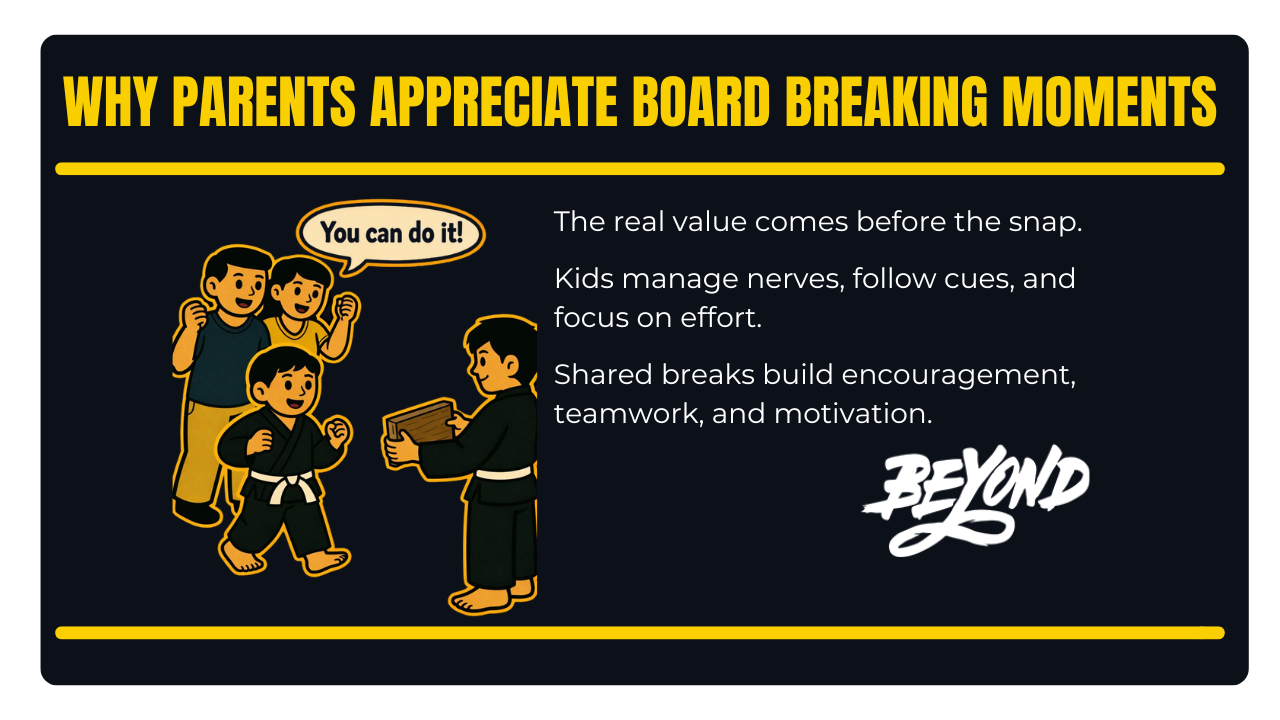
Parents love the sound of a clean break. Yet the deeper value shows up before the snap.
You'll see your child manage nerves, follow directions, and focus on one clear task. Afterward, you see pride tied to their amount of effort and progress.
Breaking days also show you what good coaching looks like with a safe setup, clear cues, and praise for form.
Breaking also gives kids a shared goal. Their teammates clap, coaches with cue each step, and kids learn to support each other in a really positive way. That kind of enigmatic team energy matters for shy kids and for kids who feel under pressure to be perfect. A school can turn a single break into a room full of encouragement, and that helps kids stay engaged and keep showing up to class.
Frequently Asked Questions
- Does board breaking hurt?
- When done correctly, board breaking should not hurt. Kids use proper technique and controlled force.
- Do kids have to break boards to advance?
- No. Board breaking is a learning tool, not a requirement for progress.
- Is board breaking aggressive?
- No. Martial arts teaches control and discipline, not aggression.
- What if my child is afraid?
- Fear is normal. Instructors help kids build self-trust at their own pace.
- Are boards reused?
- Some schools use rebreakable boards for training, especially with younger kids.
- Is board breaking just for show?
- While exciting to watch, it serves clear educational and developmental purposes.
- Does board breaking build strength?
- It builds coordination and self-assurance more than raw strength.
Conclusion
Board breaking really does give kids a clear challenge with a clear finish line. At Beyond Burbank, we've seen children transform when they break their first board.
Students train hard, they focus their energy, they strike and they see the result of all their hard work instantly. The look on their faces when that board splits is something every parent should witness.
If you want a martial arts school that builds self-trust and character in a supportive environment, Beyond Martial Arts in Burbank offers programs specifically designed with both kids and parents in mind. Our instructors understand what children need to feel successful while staying safe.
Why not schedule a free trial class today? You can sit back and watch as your child begins a journey that will help them grow both on and off the mat. Many parents tell us it's one of the best decisions they've made for their child's development.
Train with us in Burbank.
Watch your child break their first board with confidence. Claim a free trial class and meet the instructors guiding students from white belt to black belt.
Claim Free Trial Class